


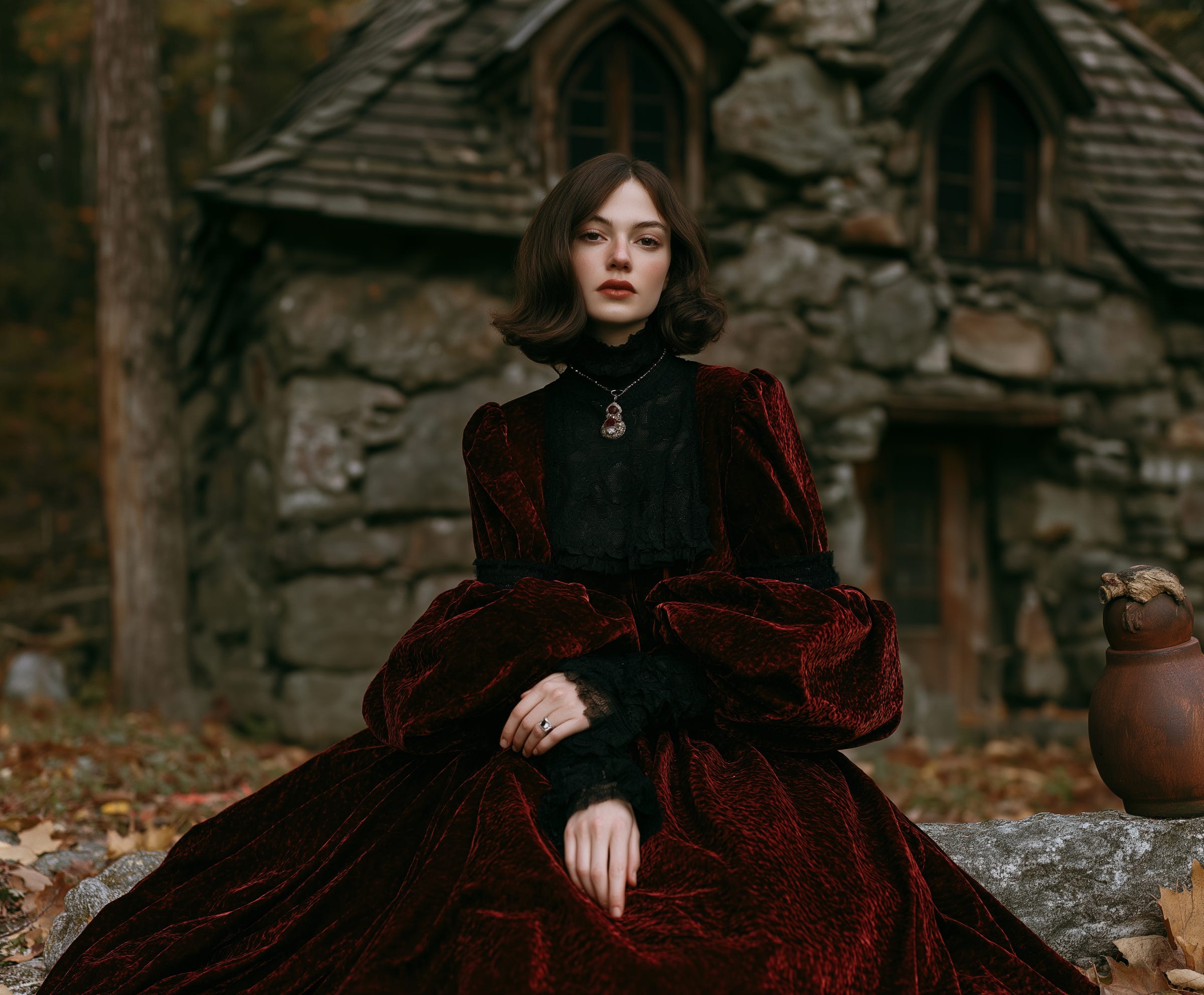
On an airplane recently I watched the Colorado River carve through the mountains in places without a road beside it. I want to live there, I thought—to hole up in a cabin in the woods. To let the world do all the crazy things it will do without me. To live peacefully and beautifully without having to worry about any of it.
This desire to abscond to the wilds is not a new phenomenon. This is the tradition Henry David Thoreau steps into, as well as John Muir, and now Martijn Doolaard. None of these individuals had to live this way, but all chose to forgo the comforts of modern life for something quieter.
I crave it.
The more I’m online, aware, watching the news. The more busy life gets, full of travel and calendar invites scheduled a month out. The more money I spend and things I have. It doesn’t feel enough anymore to not be on social media. I crave a deeper immersion. To not just get rid of parts of it but to get rid of it all. To enjoy something much simpler.
To enjoy something without.
Without screens and media and television.
Without microwaves and delivery and convenience.
Without cars and airplanes and speed.
Without calendars and schedules and planning.
Without expensive clothes and expensive vacations and always craving more.
Just a cabin in the woods with nothing.
It’s a sign of progress, they say, that our standard of living has increased. That more people can afford to buy more things and go to more places than ever before. It’s a sign of progress, they say, that we can reach anyone anywhere at all times—that we have phones and computers and internets. It’s a sign of progress, they say, that we can work on our computers and not out in the world with our hands.
And yet the more I have of all of it, I find myself wanting less of it. I want to live out in the wilds. The pandemic was the closest I’ve come to living that way, and among my happiest times. We didn’t travel beyond where we could drive. My husband and I got in our camper van and spent long stretches in the woods. We cooked simple meals outside and drank tea. We hiked up the closed ski slopes. I wasn’t online at all at the time, I was quietly working on a gothic novel no one ever heard of.
Now life has added everything back. The busy jobs and the busy calendars and the busy life. The tumultuous news and dramatic geopolitics. The phones and the notifications and the constant internet connection. The social media-ification of even the quietest online spaces.
Perhaps that’s why I find myself following the lives of those who live more simply.
First Martijn, whom I mentioned in a previous article, and then Father Johannes M. Schwarz, the priest living next door to him in the Italian Alps. Father Johannes once walked 8,000 miles to Jerusalem and back with just a backpack, then requested a hermitage where he’s lived for eight years. His videos show him working on his cabin, painting iconography and stained glass, then at the end, donning the vestments of his order, sitting before his altar, the bread and the wine, a few words of reflection.
The idea of a hermitage has always called to me, especially as a writer. Couldn’t I live so simply too? These individuals appear to live so completely offline even as they use cameras to capture it and the internet to publish it. They probably have Starlink in their windows and functioning cell phones, but I’ve been imagining that they don’t. I’ve been pretending that they live a fully analog existence and only venture down the mountain once a week to publish their videos and answer comments.
I’ve been dreaming of a world where it is still possible to write quietly away from the world even as I still publish to it.
Whenever I think of taking it to this extreme, about leaving it all for a hermitage, my mind stops me. I wouldn’t actually be able to live in the woods, I think. Because I want to travel, I want my season tickets to the theater, I want to live close to a city where I can have friends, I want to be able to go to a restaurant sometimes.
I want.
I want.
I want.
I want… too many things.
And I have often satisfied those wants.
My husband and I lived on an austere budget for two decades, saving all the rest. I took great pride in making a meal at home even when more money could have bought it. And choosing to go to a concert was a big deal because we’d decided it was worth being the one thing we spent money on that month. We knew our priorities because we had to budget for them—my husband’s favorite thing was skiing because he was always willing to spend $1,000 of our annual budget for ski passes. And I loved theater so much I was willing to do the same for season tickets. Those were our big ticket items.
Then my husband quit his job and we spent a portion of our savings traveling around the world for 18 months. We went everywhere and did everything and it was a true joy of a lifetime—a fantasy I could never have dreamed of. So much so that I found myself constantly whispering to myself that it was real. “I’m riding the tube in London,” I would tell myself, “I’m kayaking the waters of New Zealand,” “I’m camping on the beach in Japan.”
Seeing the world was intoxicating, because now I want more of it. I want to see so many places in China, I want to hike so many routes in the Alps, I want to explore so many castles and ruins and histories. My list has expanded tenfold.
And spending money was its own kind of floodgate. I saw Taylor Swift in Lisbon—it was the only concert in my life I have ever spent so extravagantly for and it was one of the most fun nights of my life. And now…. wouldn’t it be great to see Harry Styles too?
Wouldn’t it be great to have more beautiful clothing and see more plays and eat out at more restaurants? Wouldn’t it be great to have more, more, more?
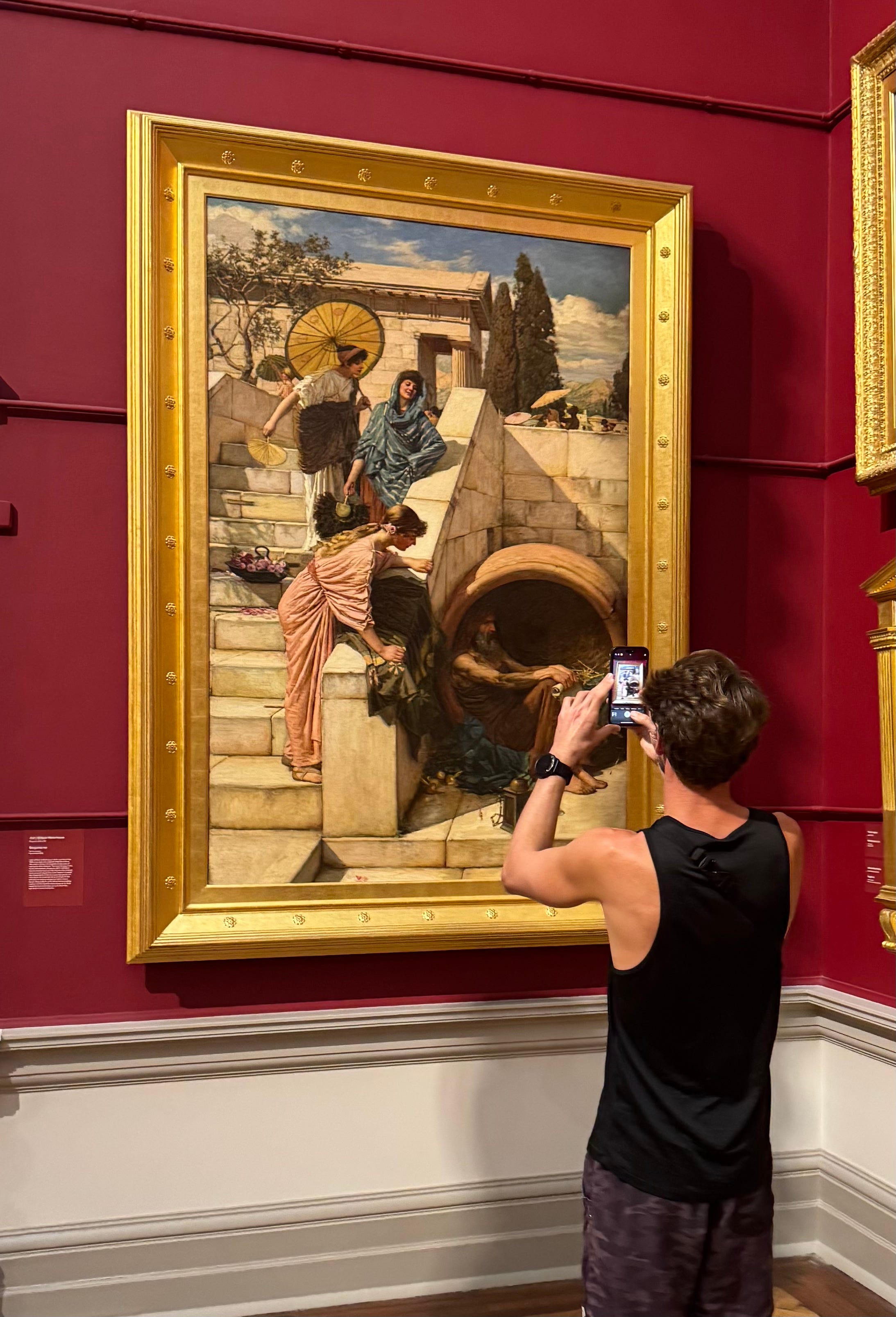
This is the trap the Cynics warned against. The Greek philosopher Diogenes lived in a jar and had only one possession, a bowl—that is, until he saw a child drinking with cupped hands and uttered the apocryphal phrase: “Fool that I am, to have been carrying superfluous baggage this whole time!”
My husband and I utter this phrase constantly—so much of our lives are superfluous baggage now.
My closet has become a metaphor for it. It’s not that I have a lot of things—I have around 60 articles of clothing and have for a decade—but sometimes I buy new things and discard the old ones to maintain my minimalism. It happens in phases: When I am balanced in my life, I can go years without buying anything new. I hang every piece to dry, iron every item with care, oil my leather bags and boots, and re-dye the ribbon on my hat. I love caring for the few beautiful pieces I’ve curated, and genuinely appreciate everything I have. But sometimes, triggered by a beautiful thing I’ve found, I’ll go on a spree. I’ll buy new things in an endless quest for “the perfect thing”—the perfect white tee, the perfect knit tank, the perfect black sweater.
I hate this about myself. It’s wasteful, it’s expensive. It’s never being satisfied with what I already have. It’s feeling like what I have isn’t already good enough.
It was this facet of modern life Diogenes raged against. Because there are two ways to get what you want: To always go after the next thing you want, or to want less. To want what you already have. The rumored story is that Alexander the Great once offered Diogenes anything he wanted, and the philosopher asked the king to move aside because he was blocking the sun.
If only the sun were our only desire! Haven’t we all been happy with so little? If all we had in our day was a spot of sunshine to walk or picnic in, couldn’t we be happy without needing much else?
But it’s hard to rebuke the world. While writing this, I mused to my husband that, if a venture capitalist offered me millions to build exactly what I want, I would love to tell him to move aside because he was blocking the sun. “But think of the good you could build with it!” he countered.
That is the allure.
They say that happiness goes up as our income does, but I’ve always hated that statistic. Happiness isn’t a worthy enough goal. We should ensure an adequate baseline for everyone, but should we also make people absurdly happy with their yachts and their private jets and their extravagant vacations?
It’s not that the wealthy are to blame, we do the same stuff within our own means. My husband jokes that Taylor Swift flies a private jet so it’s ok if he eats a hamburger. It’s a silly line, but it comes with a truth: we all have our own excesses. And how happy they make us isn’t any indication of how many more of them we should have.
I’ve always been happy, for what it’s worth, but I like my life more when I don’t want as much. When I’m satisfied with everything I already have.
The filled life—with more money and more things and more vacations. With the internet and the notifications and the news. With the calendar notifications and the texts and the emails and the Slacks. It’s exhausting. It’s endless. It’s excessive. I want to get away from it.
I’m not alone.
I recently attended an event in which we had to draw the place we would live if we were going to live by ourselves forever and no one would ever see it. I drew a ryokan in the mountains filled with bookshelves—it had a tea table on the terrace where I would write overlooking a tranquil pool that spilled into a waterfall. It was surrounded by hiking trails, and had an outdoor shower for when I returned from long walks.
When we were done with our drawings we compared notes—not a single person had included a phone or a computer or any form of technology. None had imagined big houses filled with lots of things. Most designed a life with much less, rather than one with much more.
What does it say about modern life that what we actually want is a much simpler version of it? One that is largely accessible to all of us without needing very much to achieve it?
Perhaps it says that some of the conveniences we’ve built are not actually conveniences at all but the tiresome things we have to keep up just because of the slow creep of adding them all. Perhaps it says that adding more and more and more doesn’t mean better. Perhaps it says that some of the progresses we’ve made aren’t actually the progresses we want.
Perhaps not everyone feels this way. But for those of us who dream about leaving it all for the woods, perhaps it means there’s another future we should be working toward. Not the one with the screens and the shiny robots in every home. But the one without them.
The cabin in the woods, you understand, is not just a lifestyle dream, it is also a metaphor.
It is through this fantasy, through imagining what my life would be like if I really did abandon it all, that I can see more clearly what I want—quiet and simplicity and beauty—as well as what I don’t: notifications and internet connection and noise. I don’t need to physically move to the woods to achieve these ideals, but the craving for them is a tell. I can create a hermitage in my own house. I can choose not to travel for a while, to not attend everything. To return to our budget and prioritize only the things I love most. To want what I already have. To unsubscribe from the news and put my phone in a drawer and turn everything on airplane mode.
And being a writer or videographer is one way to force the ideal. In my normal life, I might not notice that a particular fern was “verdant, the precise fluorescent shade of absinthe,” but because I have to write about it, I do. And I might not get done with work and think “I’m going to bake bread now.” But if my job was to make a video about making bread, I would. I would dress a certain way and curate a certain aesthetic. The work itself is a forced constraint, and that creates a life spent baking with a certain aesthetic appeal. Martijn Doolaard’s cabin in the woods is curated by that task. So is Father Johannes’. So is Thoreau’s. So is my writing. Every article in my content calendar is a forced PhD in the things I want to research and think about, and this article my way of exploring why I long for a cabin in the woods.
In her novel A Prayer for the Crown Shy, Becky Chambers says, “the thing about fucking off to the woods is that unless you are a very particular, very rare sort of person, it does not take long to understand why people left said woods in the first place.”
We know why we left—for all of the progresses that have made our lives so much better. But then why do we keep wanting to return?
There’s something of the woods we forgot to bring with us.
Thank you for reading,
Elle Griffin
A lot of great observations here, especially the parts about the cabin being a metaphor and the recognition that we have some control to essentially simulate that which we desire most out of the cabin in the woods, right where we are.
Thoreau has had an outsized role in my life, and I've written a fair amount about it (we even named our son Walden) along with Jon Krakauer's 'Into the Wild.' The desire to escape modernity is something I've reflected on a lot over the years and is interestingly always changing in my mind as I age. As I now see it, I think it has something to do with our innate desire for novelty and autonomy, but I think there's also something paradoxical here: Even if we could all escape to our imagined versions of the cabin in the woods, we'd perhaps find that the honeymoon phase might also soon fade, and we'd begin imagining another novel experience, one where we are trying to once again obtain our autonomy.
https://thosewhowander.substack.com/p/on-youth-and-longing-to-escape-modernity-337
Ooof I've had this same fantasy for years! I always envision myself in a cabin in upstate New York or living off the land in rural New Mexico. Completely agreed that we can cultivate this ourselves, it just feels so much easier dreaming about it in a new place off-grid.