


This is part of “Let Cities Build Utopia,” an 11-part series on the future of cities. Collect the complete series as a print pamphlet, digital pamphlet, or audiobook. 👇🏻
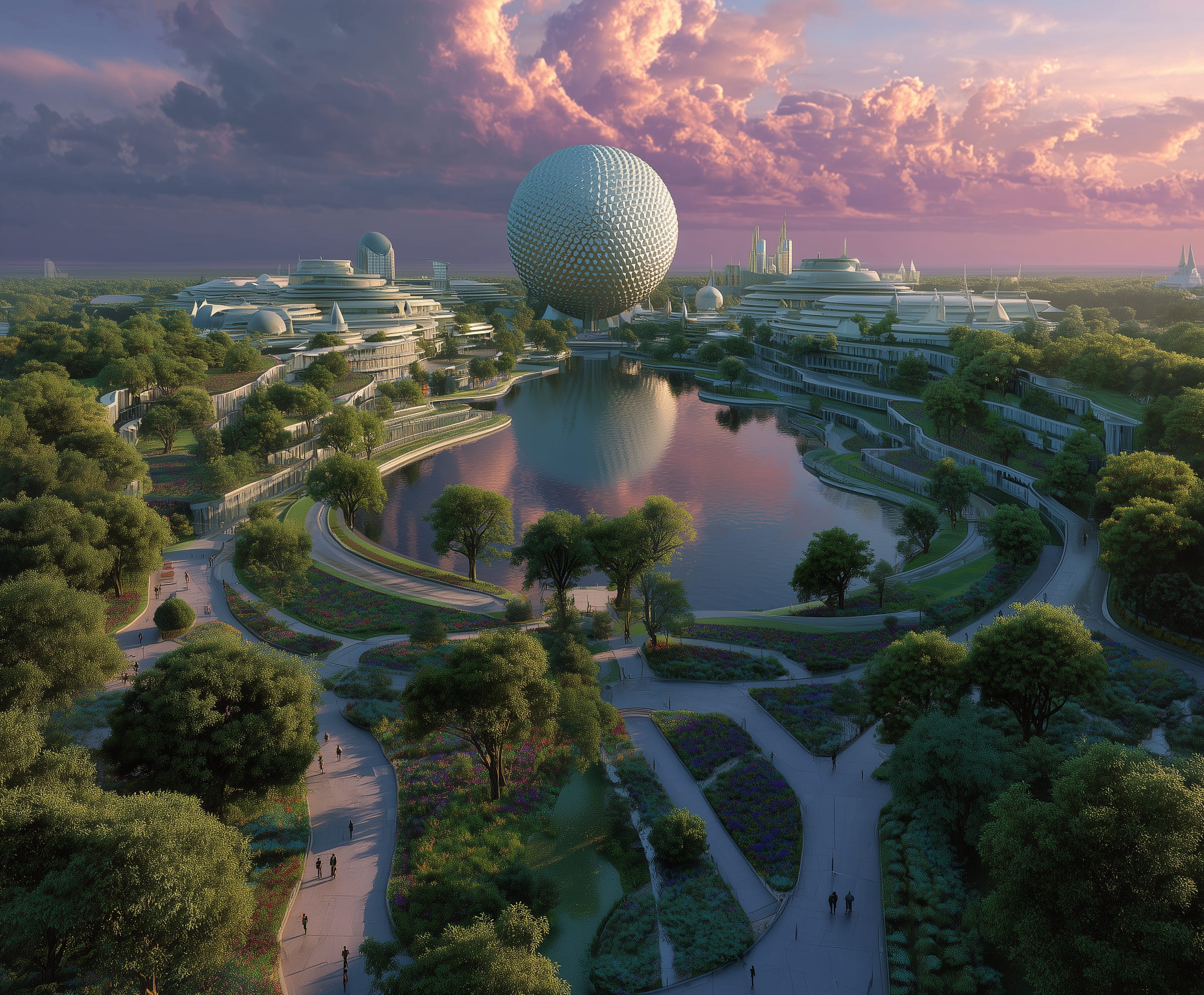
In 1966, Walt Disney recorded a video revealing his plans for a futurist utopia—a privately built, master-planned, and fully autonomous city of the future. He called it an “experimental prototype community of tomorrow,” or EPCOT.
This was not a theme park, but plans for a real city in Florida with 20,000 residents and a wide greenbelt where residents could rent homes at lower than market rate, commute to work via monorail, and enjoy a pedestrian-designed world with lush landscaping and an abundance of recreational leisure spaces.
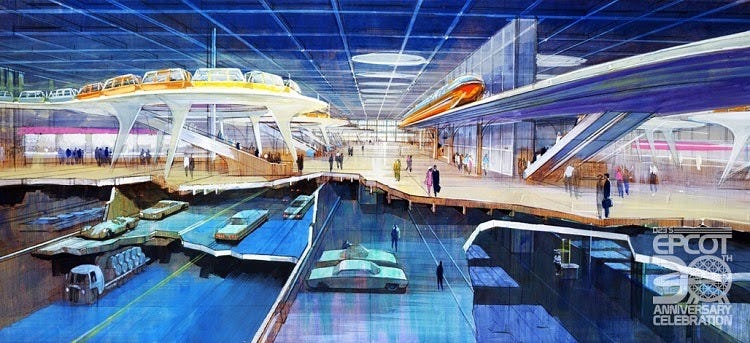
Though Disneyland, founded in Anaheim in 1955, was a theme park, it also served as a prototype for something grander—a testing ground for groundbreaking transportation innovations, some of the world’s most advanced robotics, obsessively engineered pedestrian flows, and aesthetically perfected urban design. City planners, transit agencies, and airport designers from around the world came to study the theme park.
Victor Gruen, inventor of the shopping mall, called it “America’s first walkable downtown.” Urban planner James W Rouse said it was “the greatest piece of urban design in the United States.”
But though Disney managed to carve a slice of paradise in LA, with perfectly maintained streets, no trash to be found, and streets repaved and buildings repainted nightly, he became increasingly disgruntled with the dystopia that cropped up around it. Cheap motels, tacky billboards, and fast food chains formed a “second-rate Las Vegas” around the park that ruined the experience. Disney studied the failures of City Beautiful and became convinced that city governments couldn’t create the prosperous neighborhoods we wanted to live in.
Instead, he’d have to build it himself.
Disney studied Bournville and Port Sunlight, read Ebenezer Howard’s book, and even designed EPCOT according to Howard’s concentric design.
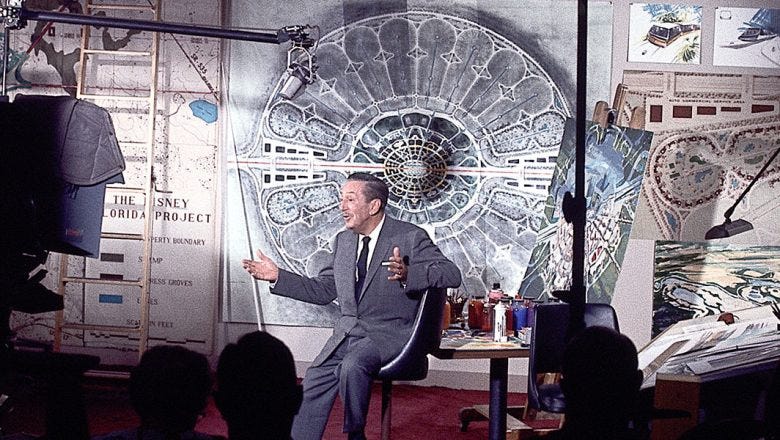
By the time he published a video revealing his plans for EPCOT, Disney had spent years quietly purchasing 27,400 acres of contiguous land in Florida—the size of San Francisco—and negotiating municipal sovereignty from the state.
Promising to bring in god-like levels of money, jobs, and tourism to the state of Florida, he secured the autonomy to build roads, zone land, run police-style security, operate fire stations and EMS departments, manage utilities and waste management, build and maintain public transportation, and manage all public infrastructure. It could even issue its own bonds!
Disney’s new Reedy Creek Improvement District was granted more than city- or even county-level authority.
It was a plot of land the size of San Francisco with the powers of California!
