


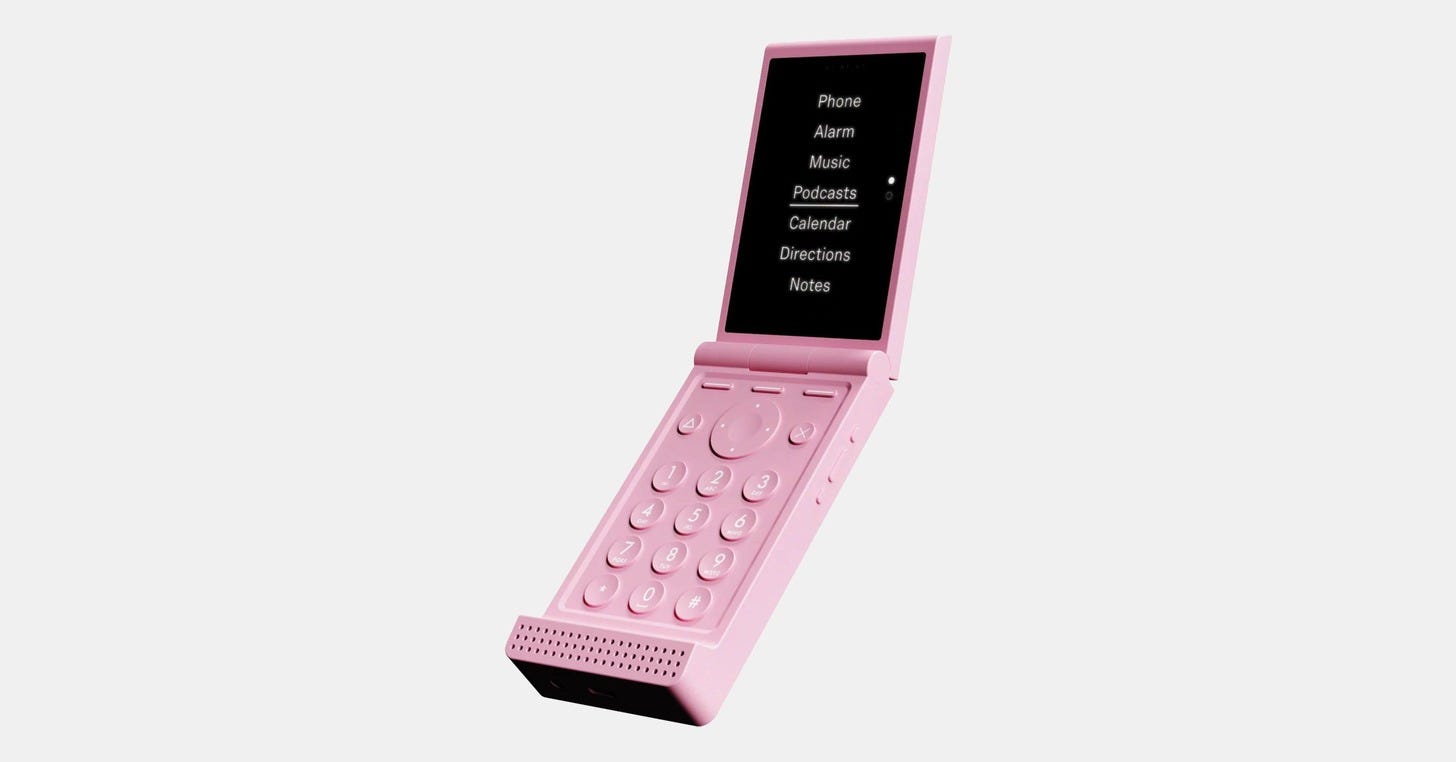
I was recently visiting my family, all of us sitting by the fire, everyone on their phones. When I got up to get a drink, I peeked at everyone’s screens—my dad was doing the crossword puzzle, my sister was reading a book, and my mom was playing solitaire. This same tableau might have played out 20 years ago and my dad would have been holding the daily paper, my sister a book, and my mom a deck of cards. So why does that tranquil setting turn antisocial when we’re doing the same activities on our phones?
I asked my family. After tossing around some ideas, we came to the conclusion that, with phones, we don’t know what each person is doing. One might be answering texts or scrolling social media, perhaps paying attention to the happenings of far-away friends or relatives rather than the ones in the room. But if that person were sitting with a deck of cards playing solitaire, we would know they were still present with us, we would still talk to one another. It would be a Norman Rockwell painting, all of us enjoying quiet solitude together. Instead, it’s as if each person is in their own world.
Not only do we lack context, but there’s a sense of distraction. I happened to be reading a fantasy novel at the time, but that doesn’t mean I didn’t also see texts scroll by. I might look something up from my book, and follow it down a Wikipedia rabbit hole. I might suddenly remember to add something to my grocery list, and shift over to my Notion app. I might send myself an email reminder of something I need to do during the work week. At any given moment, I might be pulled away from my book, which means we’re not purely sitting together in peaceful idleness, but partially here and partially pulled elsewhere. We can hide the distraction amidst other activities, but we’re multitasking no matter how much we try to single-task, increasing the sensation that we are all living in isolated microcosms.
This has led me to the conclusion that the “one device for everything” concept has serious drawbacks. It’s great when you can use your phone as a plane ticket as easily as your credit card or your camera or Uber hailer. But when you can do everything in one place—the good things like read and listen to music and do the crossword, as well as the social things like texting and social media and YouTube, as well as the work things like email and Slack and calendars—we’re constantly code-switching in a way that leaves our inner worlds scattered, and our exterior worlds looking like a bunch of shells staring down at our phones.
And because there is always the possibility of some new notification, we twitch toward our phones as if they are cigarettes we can’t quit. We tap the phone idly to see if there’s something new, then continue to do so all day. If I’m standing in line, I might as well look at my phone. A quick trip to the bathroom, might as well check my phone. I don’t even have any social media accounts, or even the Substack app installed on my phone, but I still have texting and email and a browser and that means the constant possibility that there might be something to grab my attention. How much more difficult must it be with TikTok and Instagram and Facebook and YouTube, among the most popular apps by usage?
I think the “before smartphone” times were better. We had more devices—a camera for pictures, a GPS system for directions, a Walkman or iPod for listening to music—but that solitary focus was important. It was nice to carry a camera on a hike without also carrying communication with work. It was nice to get directions without also seeing texts from friends pop up when I was driving. It was nice to walk around listening to my Walkman, the same CD over and over again, rather than being bombarded by the next thing up in the algorithm. And our friends around us had the necessary context—we knew when someone was listening to music or reading a book—we were still present with them. There were no notifications to draw us away.
Now we are inundated with them.
When gathering with a group of friends, all the phones sit on the table, everyone’s eyes flicking across the screens at each new text and notification, permanently distracted from the conversation we’re having. Some even pick it up and respond—having a conversation with someone who isn’t even in the room with us! And I loathe the distraction—I don’t want to be interrupted from my work, the book I’m reading, or the movie I’m watching, even if it’s by a friend sending me a message. When I’m watching a movie, I want to be watching a movie—not also checking my phone!
Because of this, I’ve developed a rather austere communication style. The only notifications I have turned on are phone calls. Texts are set to silent, with no banner alerts with the exception of my husband and family members. I only use text messaging to share photos with my family group text or schedule an in-person gathering with friends. I batch answer everyone at once and never use texting to actually have a conversation—that should happen in-person! My philosophy has become something like: Let’s never talk until we are in-person. And then when we are in-person, let’s give each other our full undivided attention. And let’s continue to remain steadfast friends despite the lack of communication in-between because our real relationship lives offline, not through text messaging.
Unfortunately, this philosophy sometimes burns me in practice. I recently learned that a family member assumed I no longer liked them because I never texted them. Friends have been upset at my lack of response—sometimes I’ll see a text and mentally plan to respond later only to forget. And if I never see a friend in person, this communication style means that, in practice, I never talk to them. At social gatherings, sometimes I’ll find myself sitting at the table without my phone, frustrated that my friends aren’t paying me the same attention, or upset that my husband’s watch keeps vibrating while we’re having dinner—the disruption causing both of us to ask, “what were we talking about?”
To me, all of the “social” behavior happening on our phones is actually anti-social behavior. We’re paying attention to notifications more than the things we are present for in real life.
This has me longing for my teenage years when the only way to reach me was by landline. Only my closest friends had my home phone number—the rest I saw at school. When my family was out and about, there was no way to reach us. When we returned home, we checked our answering machine for a once-a-day batch of notifications. And if we were watching a movie or eating dinner, we took the phone off the hook. I was fully present in my life—we all were! Because that’s how all communication worked at the time, our default communication style was either in person, scheduling to be in person, or “call me back when you get a chance!” No one was bothered by long absences in between, and for the acquaintances and family members we saw less often, we sent lengthy Christmas cards complete with a paragraph for every family member.
That was better.
Now the default is not just text messaging, but also Slack and WhatsApp and Telegram and Discord and DMs on Substack. Not to mention notifications from Instagram or Facebook or whatever else. Today, Christmas cards are just a postcard with a photo on it. We’re expected to stay in touch and follow via Instagram, and the result is that I feel less connected to friends I text with, than when none of us could text at all.
Make no mistake: this is disturbing us.
For a long time, I thought I needed more peace and quiet than everyone else—too much noise, too much stimulation, and I start to feel frazzled. I’m aggravated, not just by phones, but by TVs in restaurants and bars, advertisements flashing at us on buses and trains. But now I think everyone else needs the same amount of peace and quiet and we’ve just adapted not to have it. Instead, we live on a hyperstimulated level, everyone twitching from the constant grasps at our attention. I can see people’s eyes flicking about when I talk to them, checking to see if there’s something else that might pull them away. I think this is the cause of so much of our anxiety and ADD.
Steve Jobs’ tech minimalism—one device for all—created a notification machine we are now carrying around in our pockets. And this is a reality many of us are now trying to unbundle: with screen-blocking apps that keep us from accessing social media at certain hours, with Yondr pouches that lock phones away during comedy shows and events, with policy that keeps kids off phones at schools or away from the more addictive elements. We are seeing a resurgence in disposable cameras, cassette players, typewriters, Kindles, and third devices that allow us to single-task away from the busyness of our phones.


It’s a catch-22. We have to have our phones and can no longer live life without them, but we also wish we could go without them, so we’ve created a host of third-party apps and technologies that block us from using them. This is a design problem now being tackled by a wave of hardware designers, the most prominent attempt being the Light Phone. There is nothing to do on this phone except call and text, with a few minor utilities in addition.
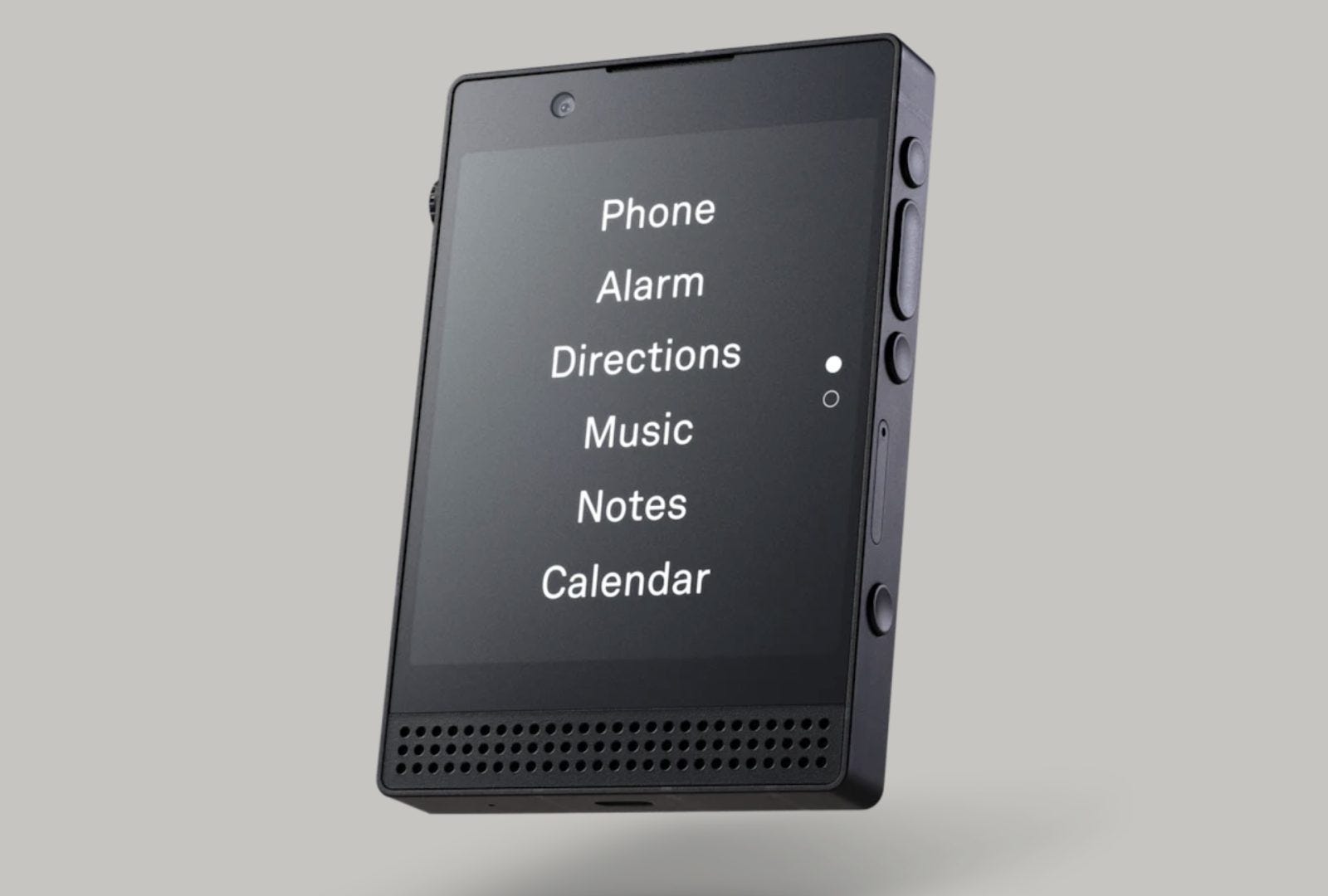
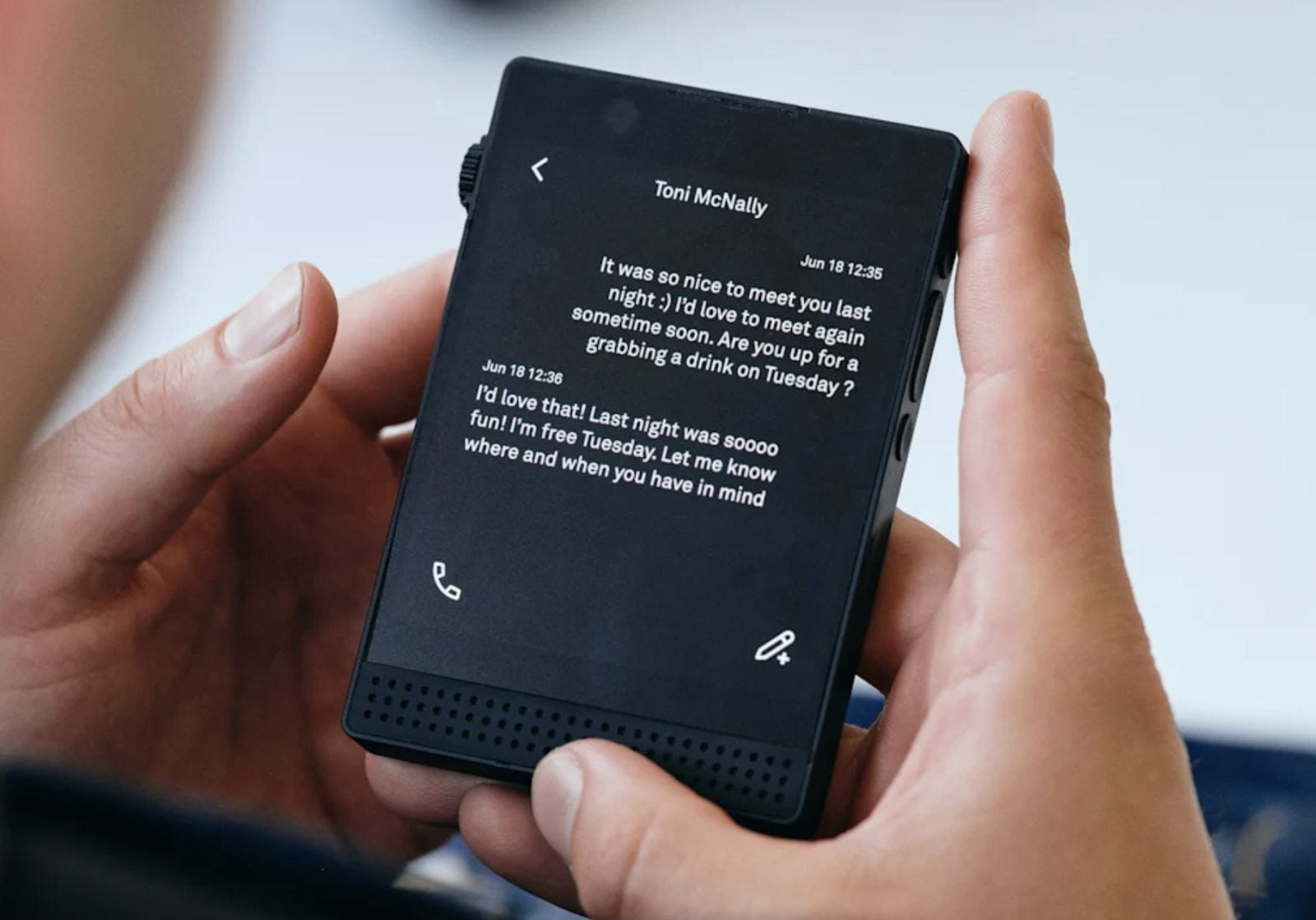
I especially love their new flip phone.
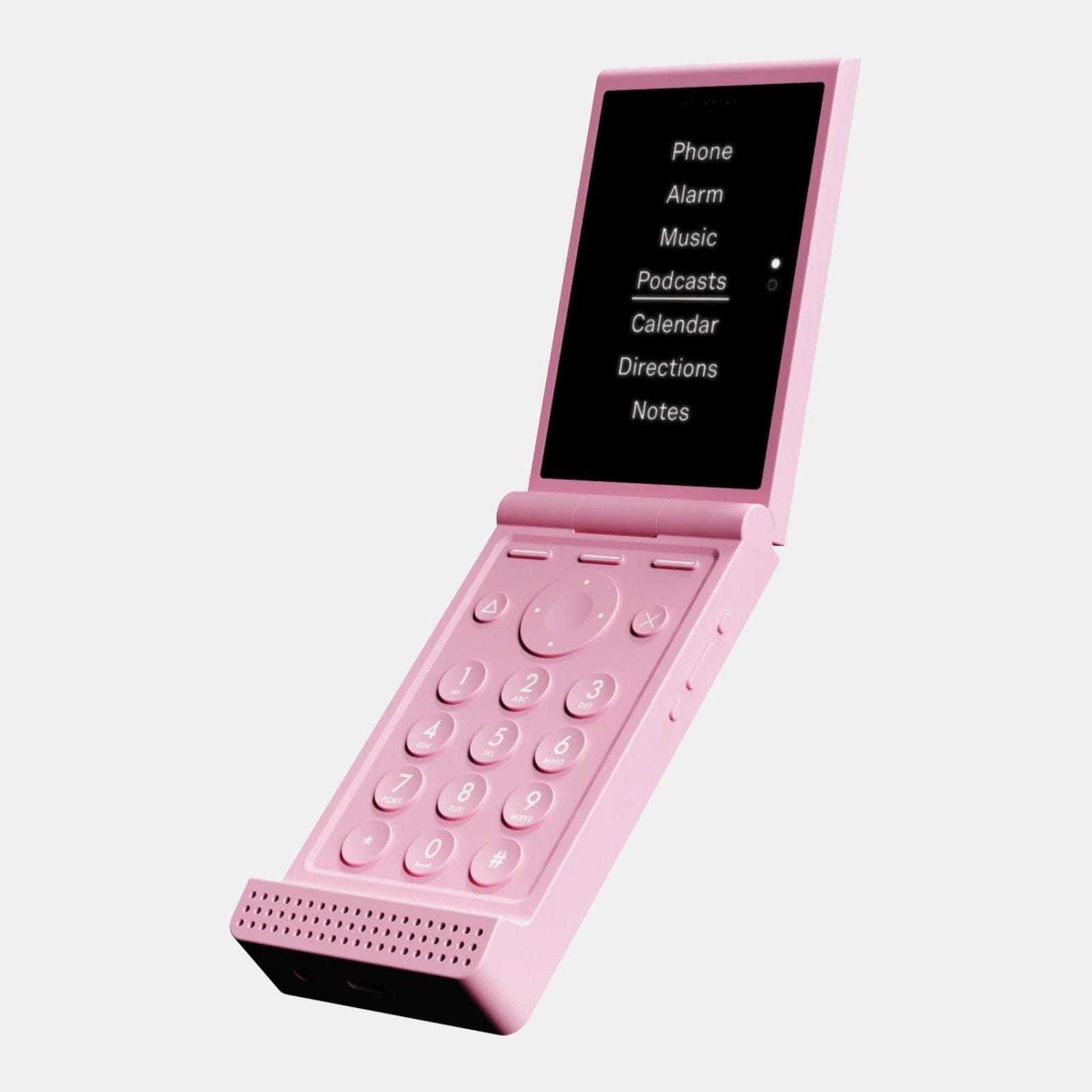
There’s a lot to love about this phone. There’s nothing to scroll, there’s not even a browser—and wow did they nail the aesthetic—but it falls short in one crucial way: It imagines that the phone’s sole and most important use is as a phone and messaging device. It is not. My phone is also my wallet; it serves as my boarding pass when I grab a flight; it’s how I hail an Uber or a Grab, or scan a concert ticket. I need my Authenticator app to log in to anything, and I have to check my email for a confirmation number when I’m returning a package. When I’m on a hike, it is my GPS device and map, as well as a way to call emergency services via satellite. When I recently arrived at the airport, expecting to print my boarding pass from an Alaska Airlines kiosk, I couldn’t do it. I was forced to download the Alaska Airlines app. When I arrived in Canada, I had to download Canada’s visa app to get into the country. I had to do the same entering England.
For the Light Phone to have calling and texting but none of those utilities makes it entirely unusable. As katie lowe points out, after she switched to the Light Phone she had to get an iPad to use her bus pass or pull up a QR code. It would be much easier to delete all the apps I hate from my phone than have a dumb phone that can’t download any of them. Our world’s no longer built for it. Meanwhile, the Light Phone keeps texting, one of the most disruptive notifications. As Katie pointed out, even with the Light Phone she finds herself obsessively checking for texts. For this reason, I think the phone should be reimagined solely as a utility—it’s the wallet and the boarding pass and the Uber—but we should get rid of notifications. That includes texting.

My favorite concept to this end is one by Future Facility called Susa, which gets rid of the screen altogether. This phone is navigated solely by voice and with a texture that feels more like slate than polished glass. You can still make a phone call, but everything else is pure utility. You’ll have to wait to get back to your computer to send text messages or check emails or scroll a browser. I think that’s better.
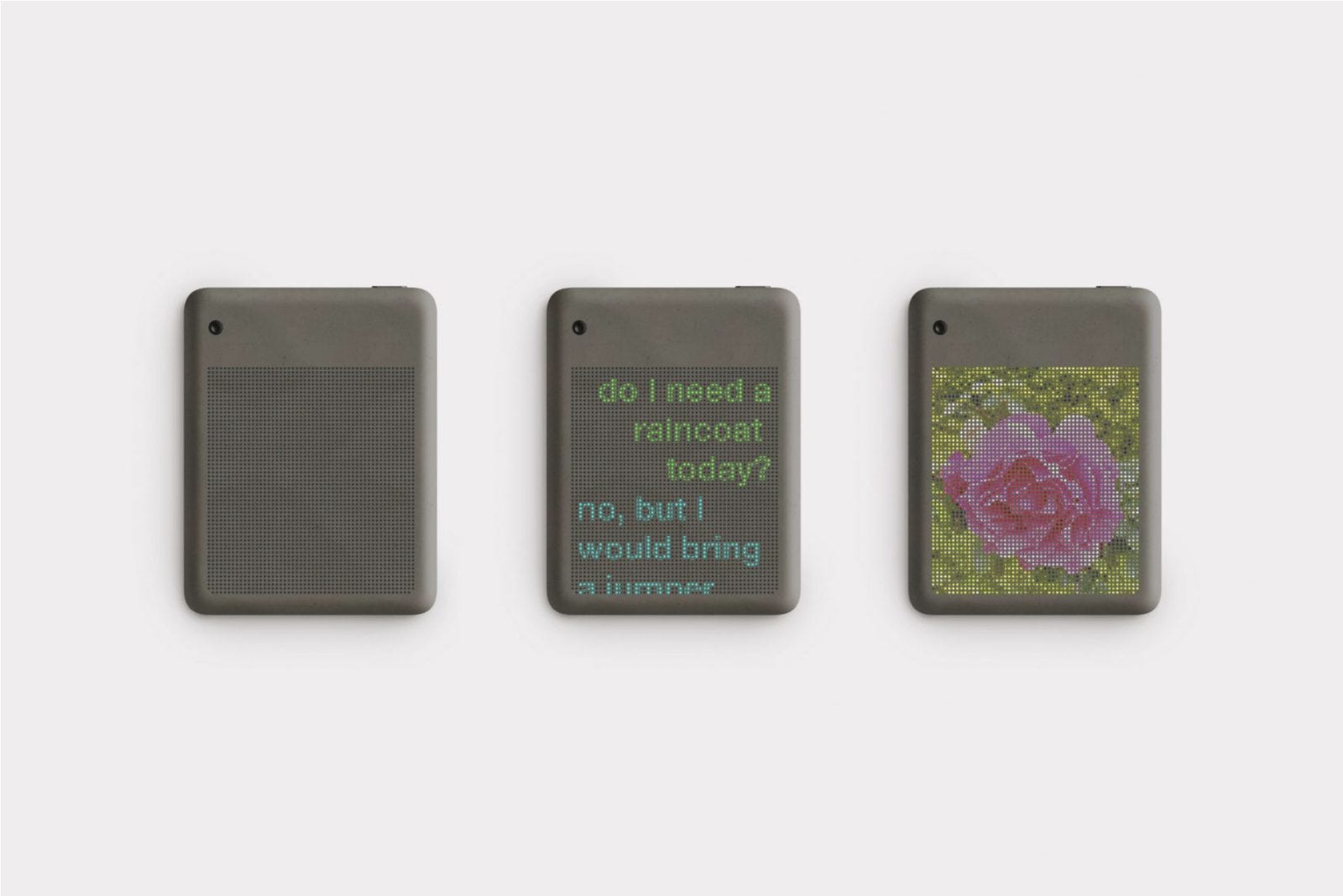
This puts me in mind of Amish phone shanties. When the religious group first adopted the phone, they put it in their homes only to be annoyed when it rang at dinner time. To avoid the notification, some built phone booths down the lane where they could check messages once a day, and call neighbors to leave a message in return. Others, with separate offices where they worked, kept their phone in the office. In the early days of the personal computer, the rest of the world worked the same way. There was a computer room, in our homes and our schools, with a threshold one had to cross to enter the internet. This separation was ideal, limiting access to a seated hour or two rather than a constant barrage out in the world.

There is no reason a device like Susa couldn’t return us to the computer room era. Phones could be notification-free, scrolling-free utilities we carry around for maps and wallets, and we could answer all our notifications once we return to our laptops.
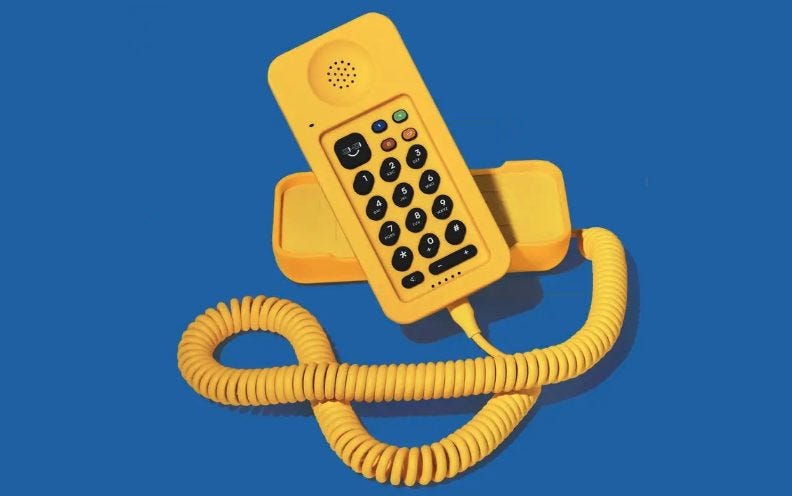
Interestingly, we are already designing this world for kids. There seems to be unanimous agreement that children shouldn’t be subjected to the same onslaught of notifications and scrolling, so we recreated the landline for them. Tin Can plugs kids into a wall, limits who can call them and during what hours. Why aren’t we making all communication like this?
Because we don’t have this world, adults are going to absurdist lengths to separate themselves from their devices. I especially appreciate Ben James’ project to take his text messages analog. He made a tiny fax machine out of a receipt printer, rigged it to an iPhone, and plugged into the wall. Now whenever he gets a text from a friend, it prints it out.
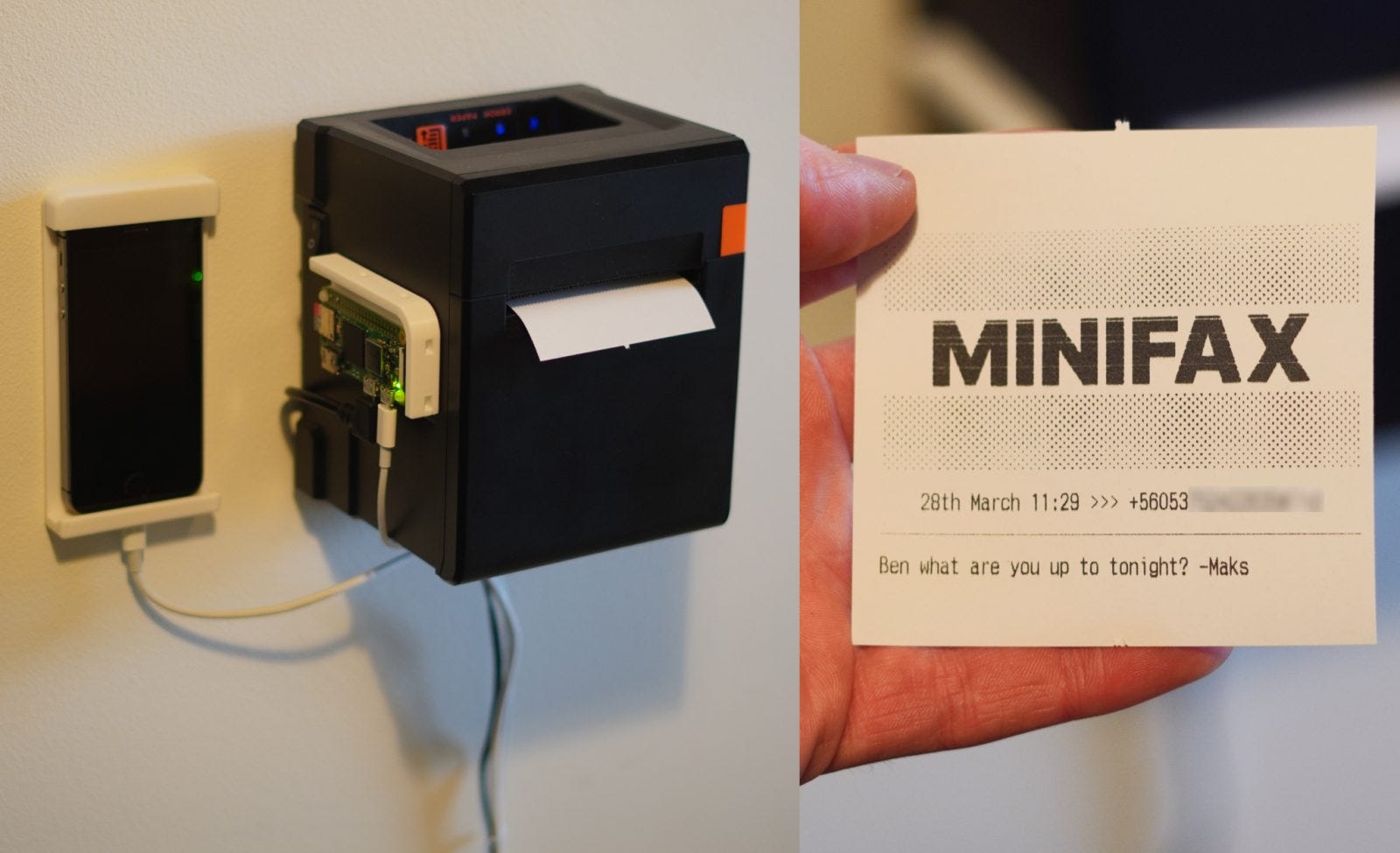
I love the idea of checking the tiny paper trail in my bedroom once a day instead of a device. Though a friend already abused the system by texting him the entire script to Bee Movie:

Separating notifications from our phones and moving them back to the computer room could create a range of more satisfying devices—not just the Susa as our phone, but analog devices that keep the context our screens have lost. The Kindle has long served as this third device, a place only to read, and thus making reading a recognizable activity to the person sitting next to us in a coffee shop. I only wish it had tactile buttons to turn the page. There’s a reason it’s more satisfying to play mahjong or rummikub than cards—the tiles clack against each other and feel heavy in your hand. Screens have flattened the experience of everything, from reading and doing the crossword to writing and paying and even driving my car. Taps and swipes are not satisfying—the knobs and levers were way better.
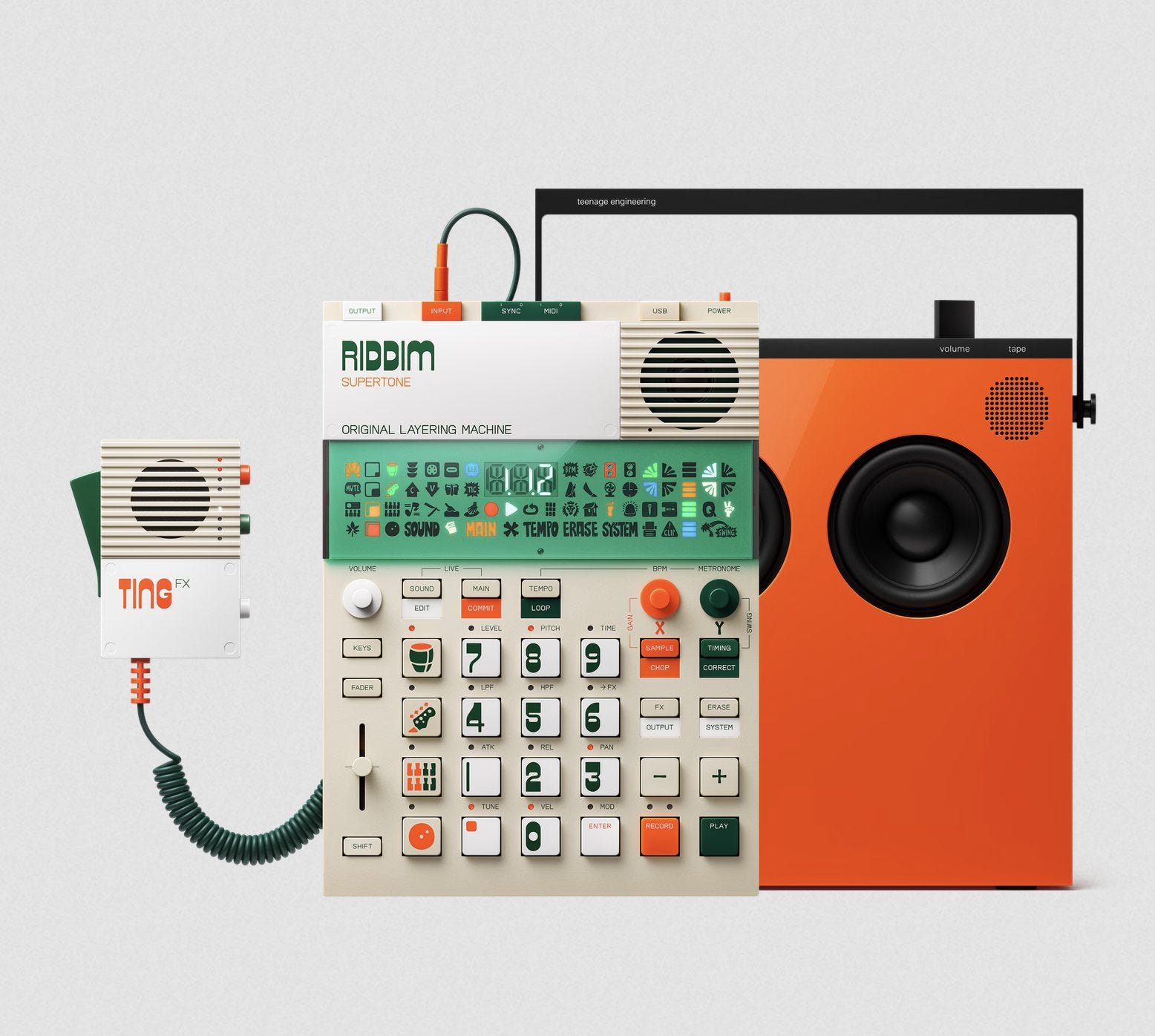
Modern hardware designers are bringing that tactile experience back, particularly Teenage Engineering. The Swedish electronics company makes sound and music engineering devices that are all knobs and buttons and dials. No screens!
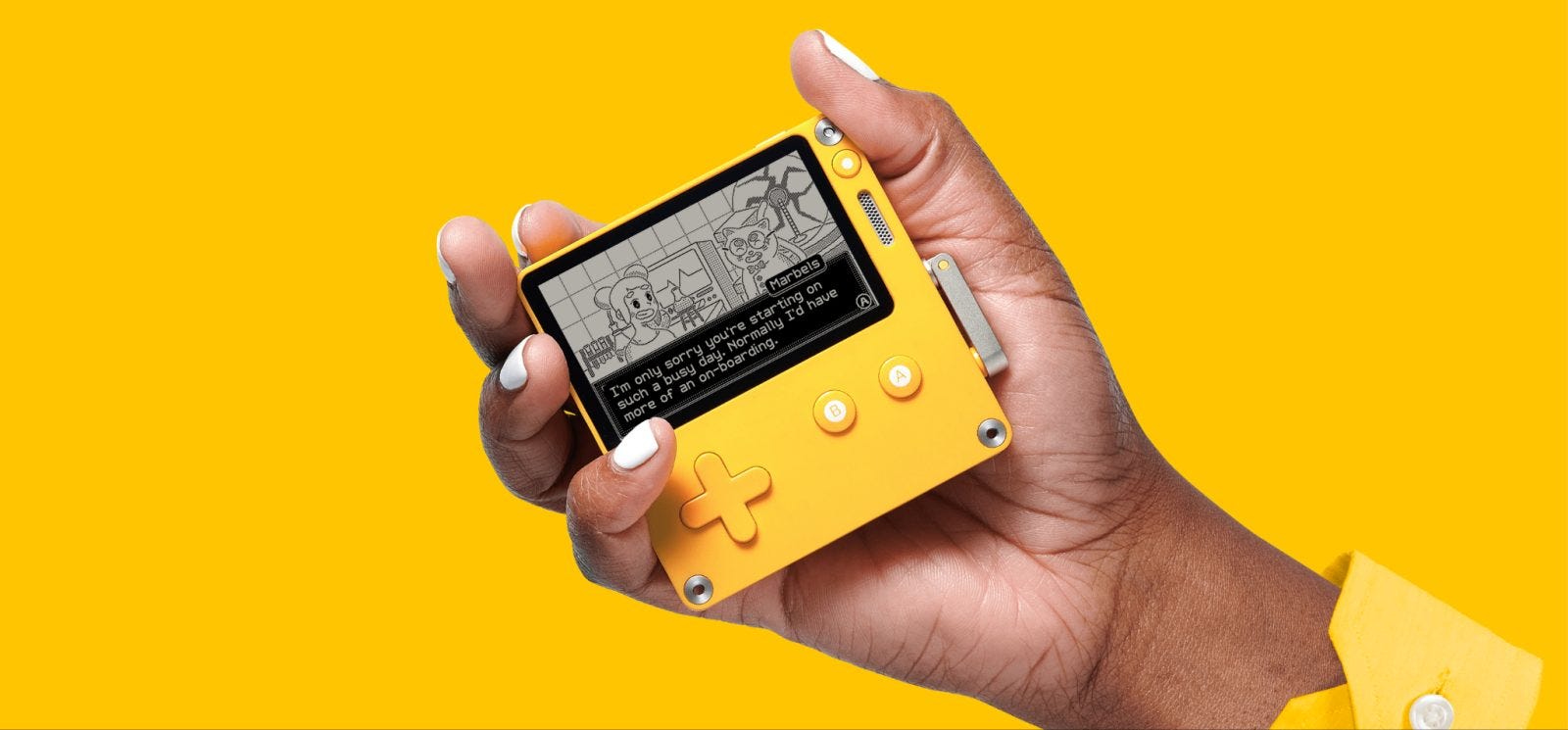
They’ve even brought that tactile experience to Playdate, a gaming device they designed with Panic, equipped with a hand crank for propelling characters forward.
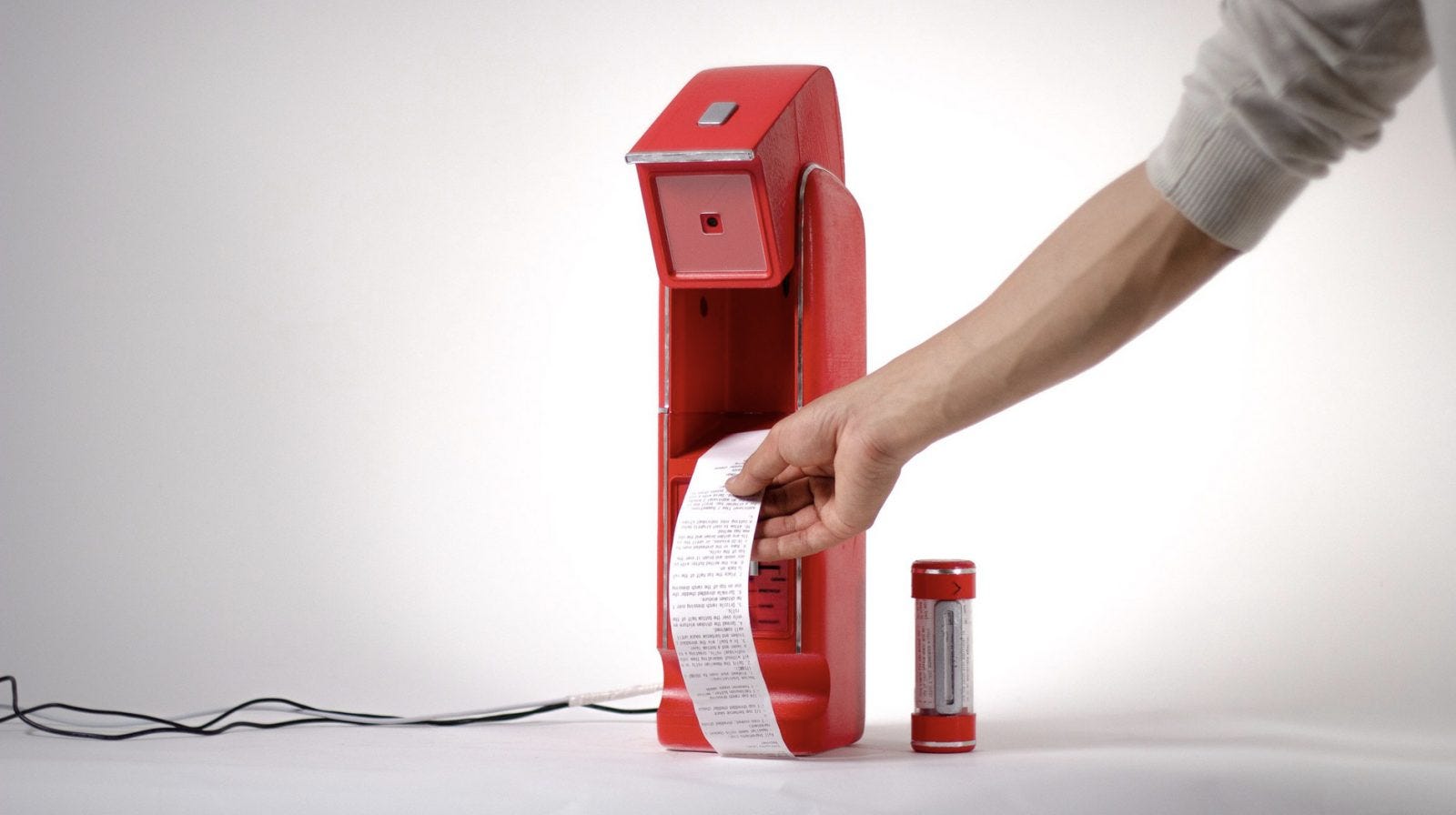
And I love all the ways engineers are experimenting with technology, and even AI, that keep us firmly rooted in the analog world. Students at MIT created a device that can check the food in your pantry, use AI to come up with a meal you can make, then print out a recipe. It’s all the benefits of AI, without looking at a device while cooking!
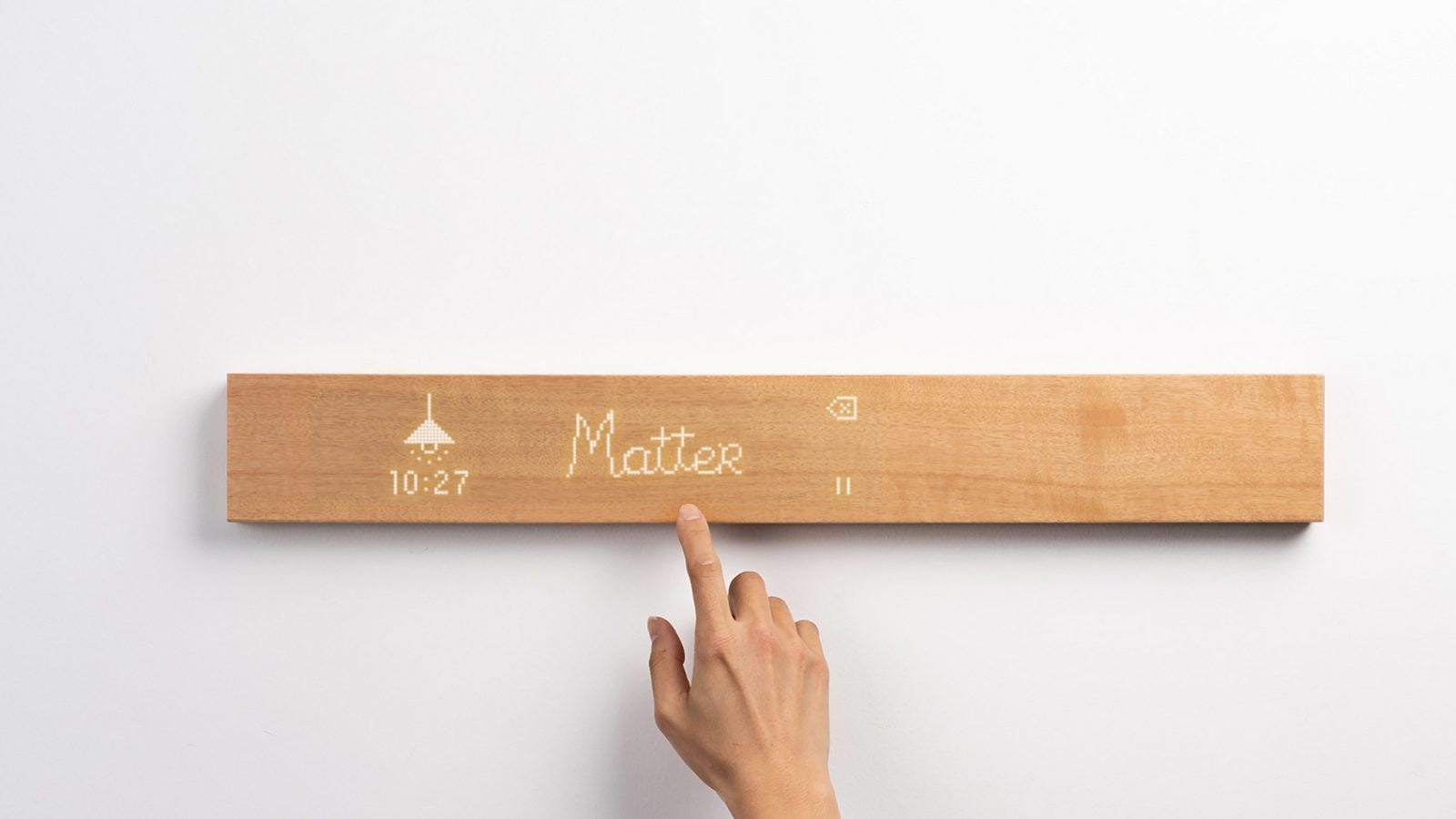
And I hope to see an influx of devices that incorporate organic elements like wood, to give more aesthetic appeal to our homes than the glass rectangle, like the Mui Board smart home device.
If I long for a phone without a screen, for notifications answered in the computer room later, for more analog technology with fewer screens and more buttons and levers, so that we can read and listen to music in public without the dystopian dysfunction of a world spent hunched over phones, I also want my devices to be fixable, like the Fairphone.
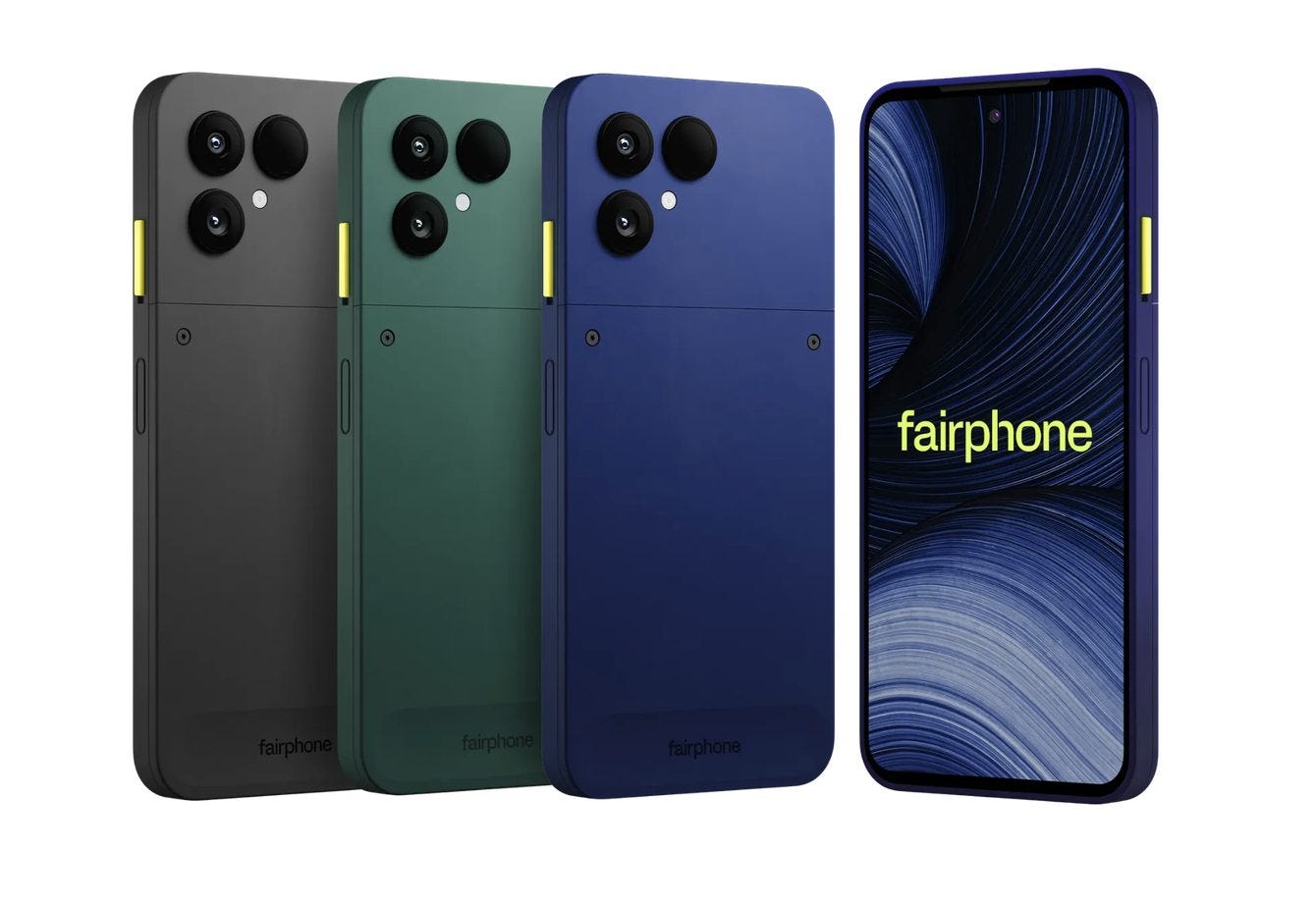
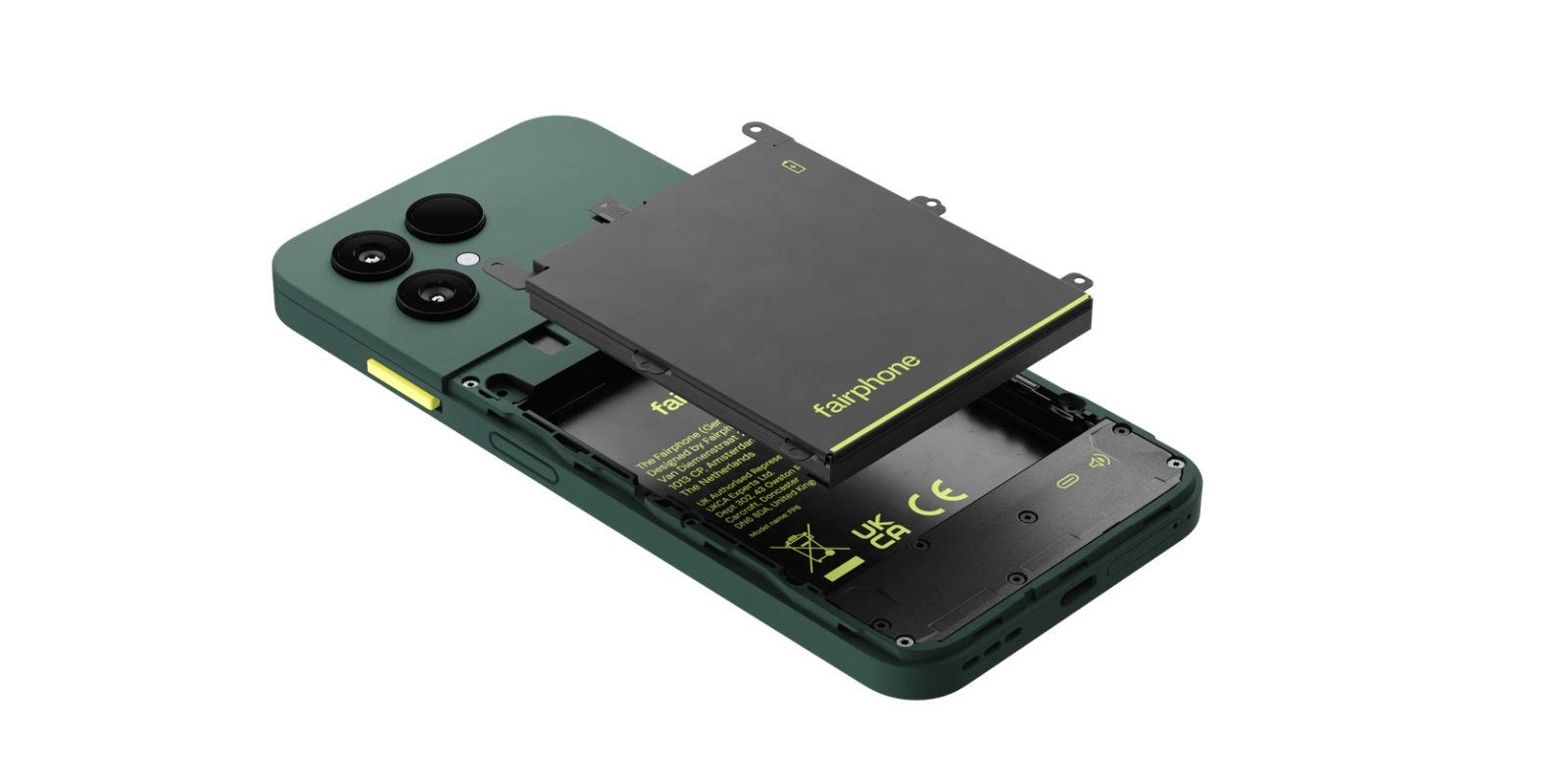
Created by a Dutch company that thought phones should last a lifetime, the device is fully repairable—by anyone with a screwdriver—and users can buy replacement parts online, including batteries, cameras, and everything else inside the phone. Not only that, but the company guarantees a fair wage to every factory worker, and if you purchase it through Murena, it comes with its own OS, a privacy-first version of Android that isn’t constantly transmitting our location and searches and app activity back to a corporate server.
The Fairphone is a step in the right direction, but it’s still an Android, and thus comes with all the requisite problems of our current phone design. We can either choose between a dumb phone that can’t do anything but text or a smartphone that comes with undeletable browsers and notifications, that so disturb our lives with beeping and buzzing that we’ve had to invent a second industry of lockboxes and screen-time blockers and third devices just to get away from them. Those of us who want something better have to try very hard, go significantly against the grain, and pay real money, to live a digitally minimalist life.
This is all because designers have no other option but to design for Apple and Google, iOS and Android, two operating systems that have so saturated the market that every utility I’ve so far mentioned requires one or the other. Tap-to-pay, for instance, runs on EMV, a standard every card terminal uses. But banks only allow cards onto a device they trust, aka on that’s using Apple or Google’s wallet software. A boarding pass is just a barcode—it could be on a phone or piece of paper. The only reason I had to download the Alaska app is because Alaska chose to deliver the barcode that way, and its app only runs on iOS or Android. Mobile driver’s licenses have an ISO standard too, but the states issuing them do so through Apple and Google Wallet, or a state app that works on the same systems.
This two-OS world doesn’t allow other players to enter. Developers won’t build for a platform with no users, and no one will buy a platform with no apps. That’s what killed Microsoft’s Windows Phone, as well as Mozilla’s and Palm’s attempts. Hardware designers are left with two options: design a dumb phone with no functionality, or create another Android with too much. Apple and Google, meanwhile, are not making things better, they’re making them worse—as evidenced by Apple’s new foldable iPhone that has so much screen I don’t know how one can even hold it without accidentally clicking something.
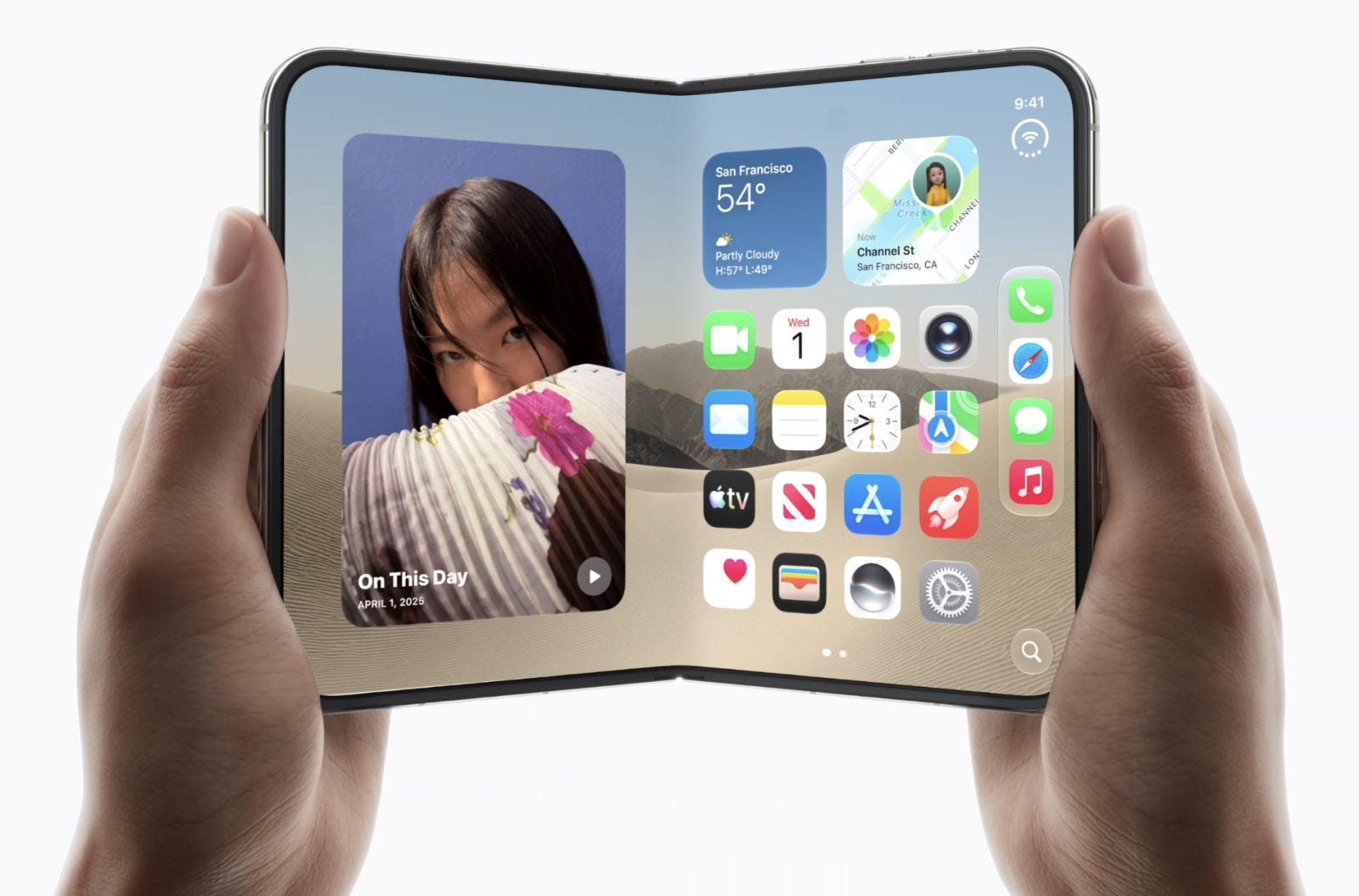
It wouldn’t be difficult to change this: An iPhone that lets me delete every app, including my browser and text messaging, would go a long way toward creating the future I want. The EU has already forced Apple to allow it. Regulations on the other side of the transaction could do the rest—banks should be required to allow cards to be loaded onto any certified wallet; airlines should be required to allow boarding passes to open on any device or app. This combination would give hardware designers the chance to think beyond the screen, just as the prototypes in this essay do—the fixable device, the screen-free device, the tactile device, the single-tasking and offline device. With this kind of regulation in mind, there is no reason we can’t create a Light Phone without text messaging, or a Susa with a wallet—even an iPhone without texting or notifications.
We don’t have these devices because we have the duopoly. But we can disrupt that. There’s a nostalgia for the analog world already, as evidenced by the technologies we’re designing and building and buying, we just need to push back on the two companies in our way.
I firmly beleive that if we change our phone, we change society. We can play cards, read books, enjoy the crossword puzzle with our family members—the Norman Rockwell painting preserved—even as our phones sit away in drawers, uninteresting except to pay for something when we’re out. Notifications and distractions aren’t something we carry around with us, but isolated to the laptops tucked away in the computer room. There’s no reason our technological future can’t also be analog—with buttons and knobs instead of screens, and single-use devices so the people around us know what we’re doing, so that when we sit by the fire in peaceful idleness, we’re still present with one another—the tableau of the 90s returned.
Love this, Elle. I meditated on the design problems of smartphones a bit myself back in March. Ive tried a bunch of alternatives and found issues with all of them. We want phones that are capable but not distracting and those two things are at odds, and there's a very jagged border of tradeoffs. Strangely my hope lands on the return of the BlackBerry form factor.
https://otherworldscatalog.substack.com/p/is-2026-the-year-of-the-good-phone?utm_source=share&utm_medium=android&r=129tfw
Love this take. I hadn’t considered the lack of context but now it seems obvious. It always feels like people have vanished into the void when they’re on their phones in a way that you don’t feel when someone is reading a book or the newspaper. I think AirPods are the other enemy. I can’t tell you how many times I’ve tried to make small talk with someone only to realize they literally can’t hear me. Connection feels so much harder when everyone is distracted all of the time.