


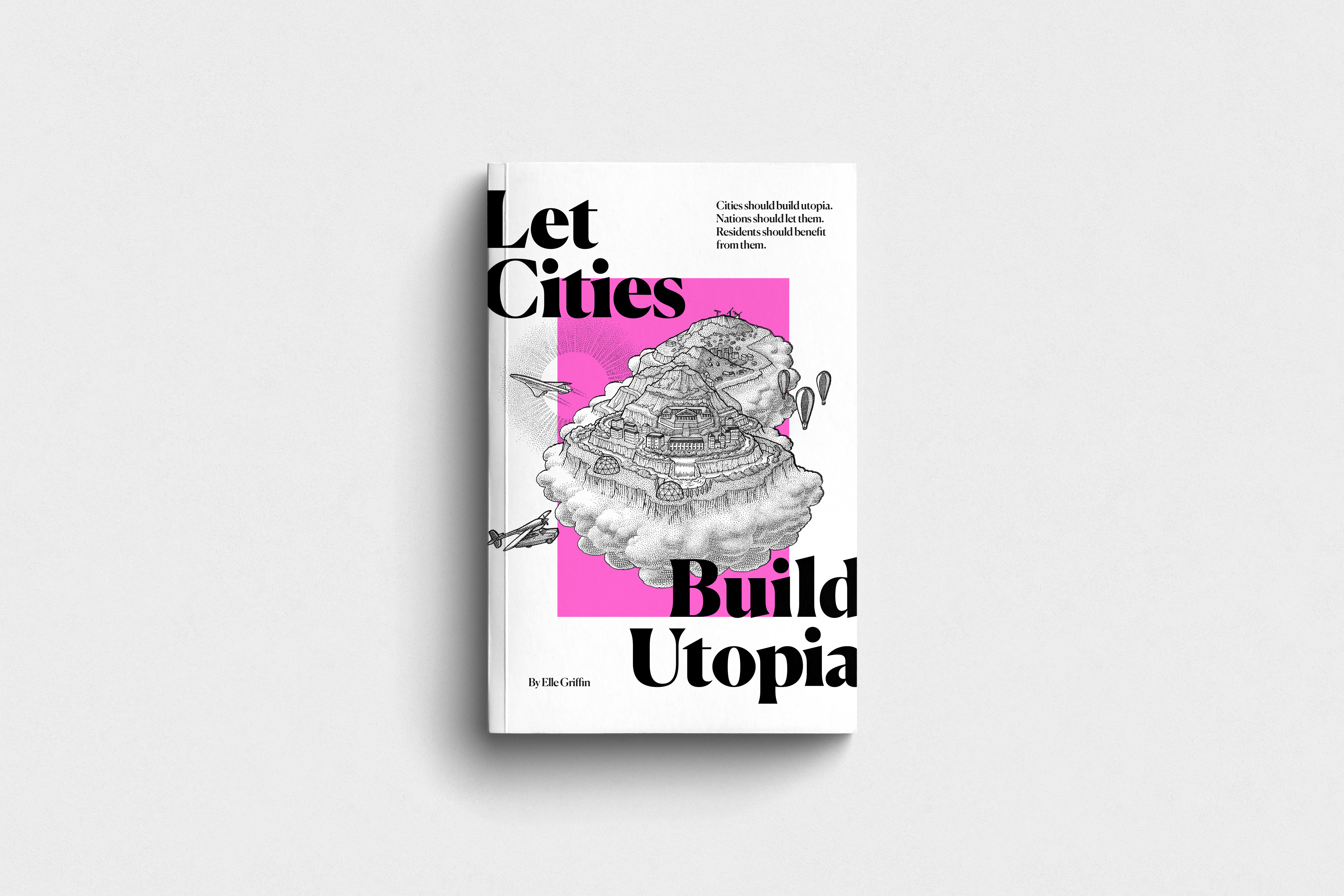
It’s here. My 16,000-word deep dive into the future of cities is now available as a print pamphlet, digital pamphlet, and audio essay. Collect your favorite format on Metalabel 👇🏻
You can also follow the series right here, where I’ll be serializing this essay in 11 installments published over six weeks. Four of the essays will go out to free subscribers, the rest will be reserved for paid subscribers. Subscribers at the Collector tier will receive the print edition. Upgrade to unlock the series 👇🏻
Why I wrote this
When we talk about “cities of the future,” we talk about autocratic city building in Dubai, autonomous city-states like Hong Kong, special economic zones like Shenzhen, corporate developments like California Forever, and charter cities like Próspera.
But these cities aren’t utopias—far from it.
That’s why I spent the past several months researching the most utopian cities of the past century. Turns out: Companies have built more beautiful cities than Hong Kong. Investors have funded a better quality of life than Shenzhen. Islands and counties have carved out autonomy for residents, not governments. Tribes are building more prosperous cities than Próspera.
The city of the future shouldn’t just build skyscrapers and GDP. It should build utopia. This long-form essay is an exploration of how we can do that.
I am beyond grateful to the Center for Land Economics who is supporting this series as a patron and whose co-founder, Greg Miller, wrote the foreword. The pamphlet was written by me, illustrated by Nina Bunjevac, designed by Patricia Faggi, and edited by Adrienne Westenfeld—my old Esquire editor and now book editor!—with line edits by Shoni Bruell.
Thank you for continuing to read and support my projects as I explore the deeper-researched pieces that will ultimately become part of my book We Should Own The Economy. I’m experimenting with slow journalism here and that means writing that could survive the next century, not just the next week.
Thank you for supporting that,
P.S. 10% of pamphlet sales go to writers whose research I relied on in the course of my studies and the contributors who helped me put the final draft together.
Just finished! This book made me think so hard about the critical elements for viable cities.
You focus on two key kinds of autonomy - ownership (trust) and revenue (land rent). But I think we need to tease them apart. Which one really matters for which part?
I would argue that the “benefit of residents” part comes from the revenue being tied to happy residents, and that’s why ground rent/LVT is so important. What the Trust or ownership brings is long-term incentive structure, so there is an entity that cares about future asset values instead of just today’s revenue.
FYI, you write about the Bournville Village Trust and Senekw, but do note that Prospera ZEDE is a public special jurisdiction, managed by the Prospera Council which acts as a public trust, with the board lead by the Technical Secretary of the ZEDE (by law a Honduran, currently Jorge Calindres). It’s the trust that contracts with Prospera Inc (the corporation) to operate the jurisdiction. So it’s structurally very similar.
Excited to see all these experiments play out!
We so need this sort of vision and ambition. When I look around my town and compare it to how it looked 100 years ago I can hardly believe that we’ve let ourselves destroy all of its functional elegance and beauty. We are so much richer now, but our built environment is horrible. I did a little project myself on one little idea. To create new beautiful car free networks, that could become economic corridors https://open.substack.com/pub/greenwaysnetwork