


This is The Ledger, a newsletter exclusively for my subscribers at the Collector tier and investors in my book project We Should Own The Economy. Here, I share my process of building a media ecosystem and writing a book in public. It includes open access to my goals and financials and how I’m performing relative to those goals and financials.
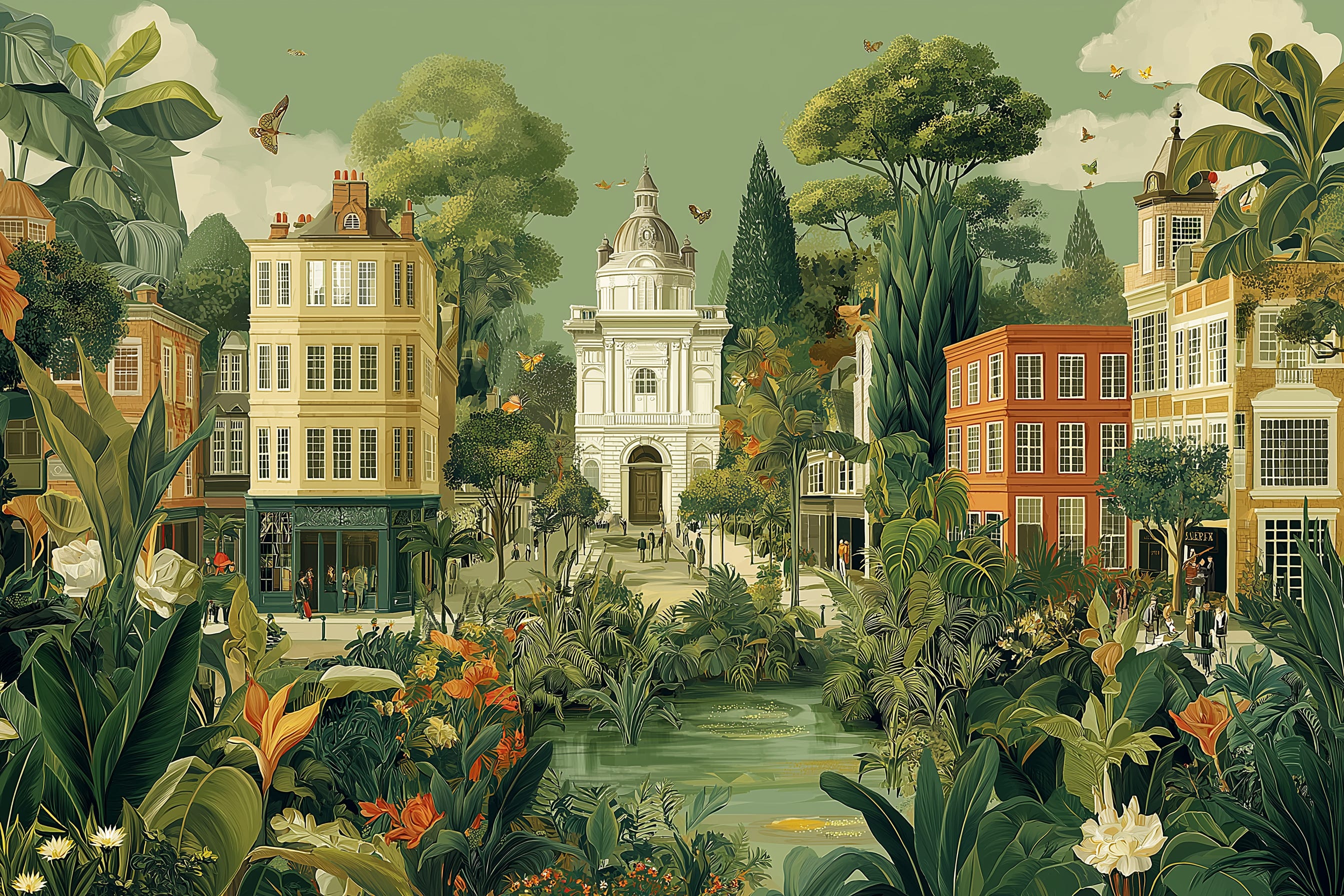
Today I want to talk about the Let Cities Build Utopia project, which has been, by far, my most influential writing project to date. This series went viral in the best possible way—not in the sense that thousands or millions read it, but in the sense that nearly everyone currently building cities did.
After I completed the essay, I sent it out to a small community of about 10 people who had either helped with my research along the way or were a prominent feature of my conclusion. One of those organizations, the Center for Land Economics, even agreed to support the pamphlet as a patron and write the foreword to the series, as well as cover illustration and design costs.
After I published the series, the organization’s founder, Greg Miller, shared the pamphlet with a number of city-building projects around the world, as did I. Then there was the network effect—paid subscribers who joined because of the project jumped into our online community and introduced me to other city-building projects—I sent my pamphlet to each of them too. Combined, this has led to a lot of meetings.
I have so far met with the founders of seven new city-building projects, each wanting to learn more about how trusts can be used to establish new cities owned by residents. The hours I spent reading old trust deeds and lease agreements is paying off, and I was thrilled to share the finer points of trust ownership with the organizations that can actually build them. This led to further research: How should trusts and lease agreements actually be structured today? What is the ideal board composition? How can investors participate, but in a capped way, so that they eventually roll off the cap table and create resident-owned cities? How do we ensure these projects are protected from outside forces (politics and corporate takeovers) in-perpetuity?
I’ve been researching a follow-up, not just for the version of this series that will live in my book, but also for the city-building projects that can use this information to create the ideal illustrated by my pamphlet: Cities with land autonomy and revenue autonomy, that act in the interest of residents, not just property developers. We can create the next generation of these cities now, and I’m thrilled to see the research and ideas presented in my pamphlet being put to use to do so!
I don’t think any of this would have happened if the series had been published solely as blog posts. As I’m learning, packaging my work into pamphlets has benefits for distribution. Most of that local virality happened from individuals emailing and forwarding the pamphlet to one another. Being able to easily share around the entire thing—some 100 pages—without needing to send 11 blog posts made it hyper-forwardable, an easy package to share far and wide. The Bournville Village Trust even asked for a copy, which will now live in their archives! And because it’s so easily shareable, whenever I meet a new city building project going forward, I’ll just send them this pamphlet.
Not only was it exciting to see this pamphlet reach all the right people and make the impact that it did, but it was also one of the most financially successful projects I’ve published to date. All but 4 of the 11-part series were locked to paid subscribers on Substack, and the complete series was available for sale as a digital ($4+) and print pamphlet ($9 + $13 shipping) on Metalabel, as well as an audiobook ($4+). This resulted in more financial support for my work than I ever received sharing free posts with all subscribers.
This was incredibly validating as I have been testing a theory. I wanted to spend more time deeply researching the cornerstone pieces that would eventually become my book chapters. I was betting on longer pieces published less often, rather than shorter ideas published constantly. As a result, I didn’t publish anything in the two months leading up to this series as I was researching it. That was a little bit stressful as I watched paid subscribers roll off and received emails from subscribers wondering if I had hung up my hat. But once the series started publishing, I was happy to receive support from readers. Thank you so much for showing up and supporting my slow journalism!!! I’m excited to continue in that vein.
Now, let’s dig more deeply into the financials. Here’s what I earned and spent on this pamphlet series, as well as my takeaways for future projects.